
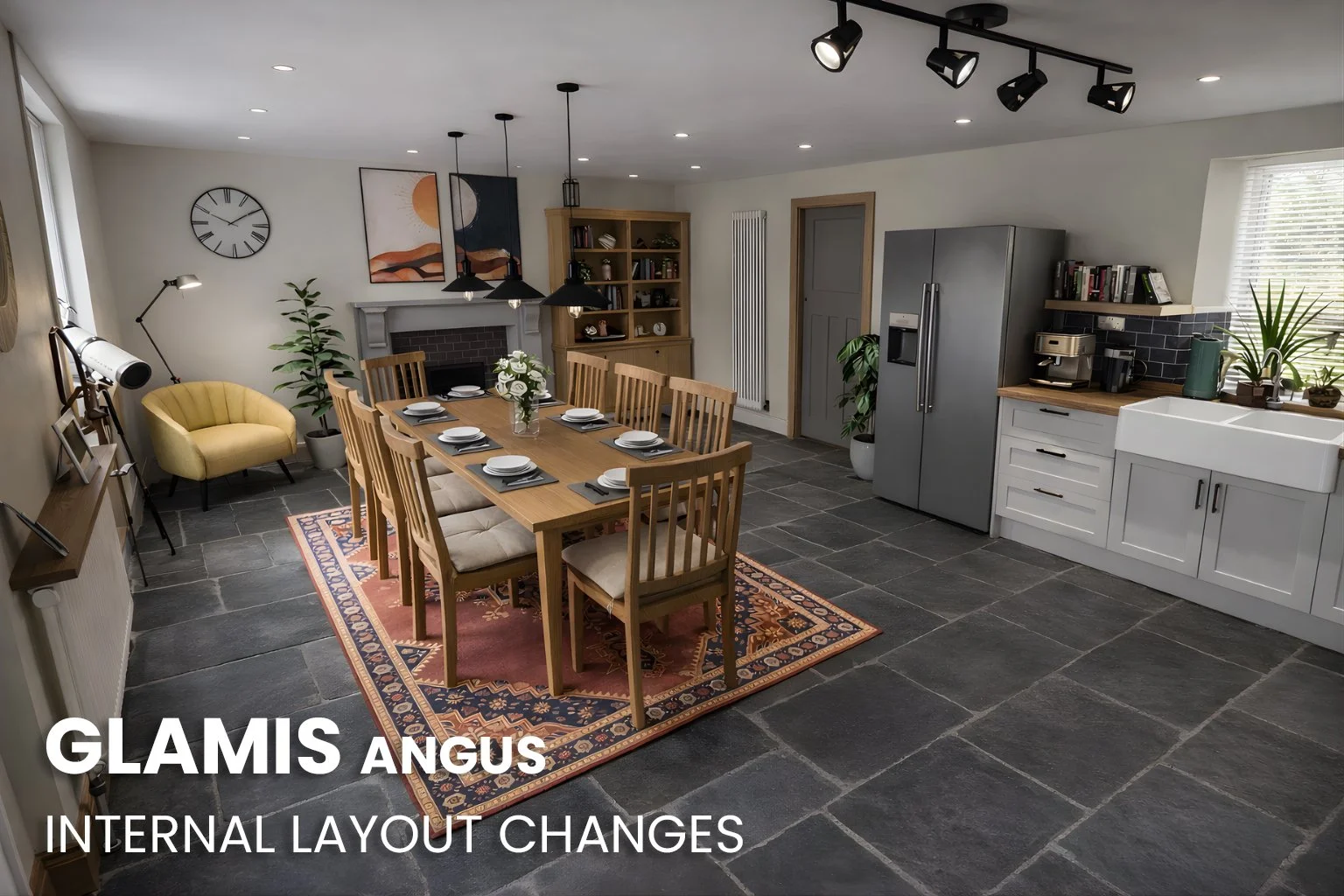
This project involves the renovation of a C-listed rural villa near Glamis in Angus, where the existing property requires a comprehensive upgrade to make it suitable for modern living. The focus is on carefully improving the building through a combination of targeted internal alterations and a wider fabric upgrade strategy. Alongside this, the proposals introduce renewable technologies, including air source heating, to ensure the house is not only restored, but performs to a standard that supports long-term, sustainable use.
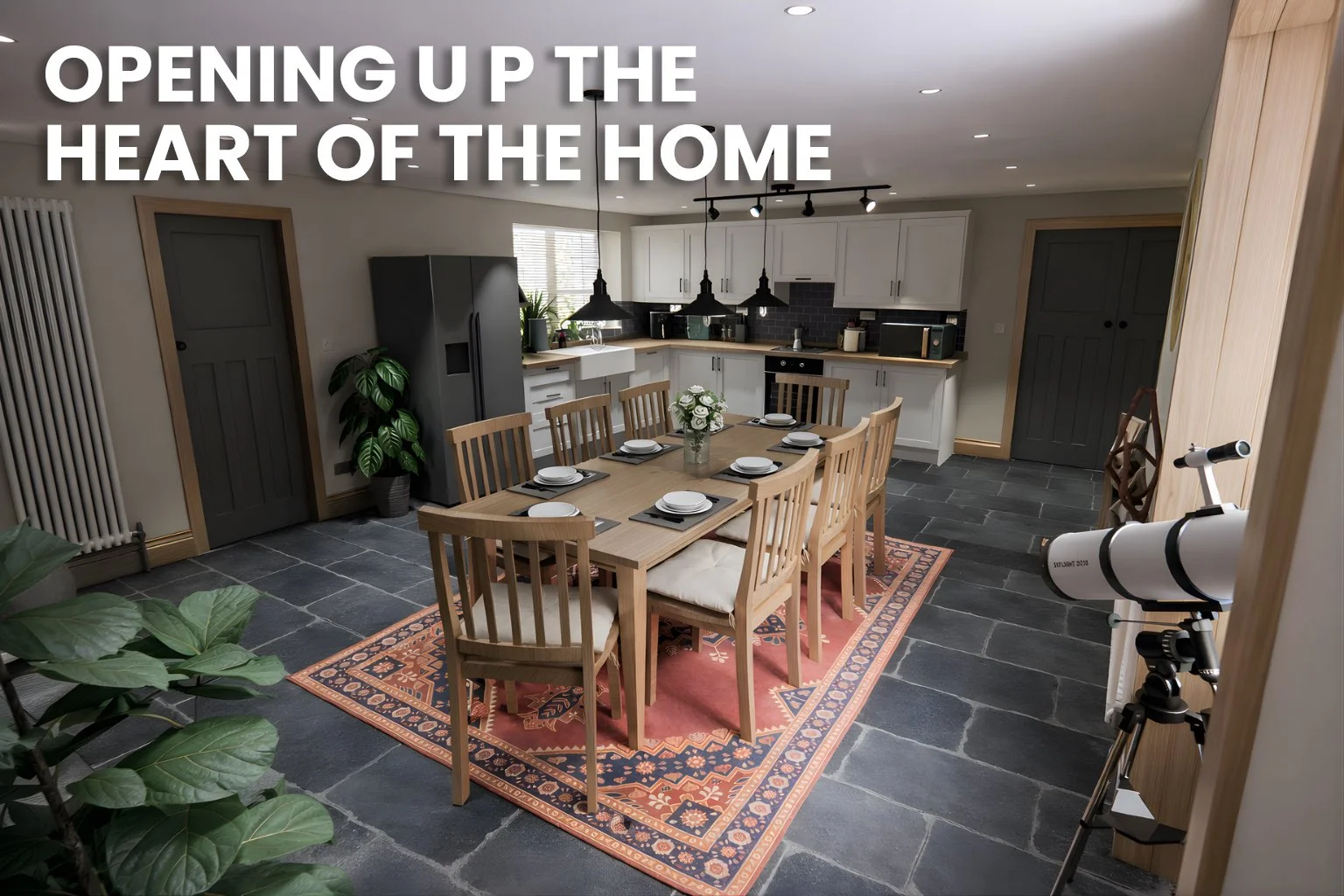
At ground floor level, the most significant intervention is within the kitchen and dining area. Previously formed of a series of small, restrictive rooms, this part of the house lacked both functionality and natural flow. The design removes these constraints by opening up the plan to form a more generous and connected kitchen and dining space. This allows the area to function as the primary living space within the home, improving circulation, usability, and the overall quality of the internal environment.
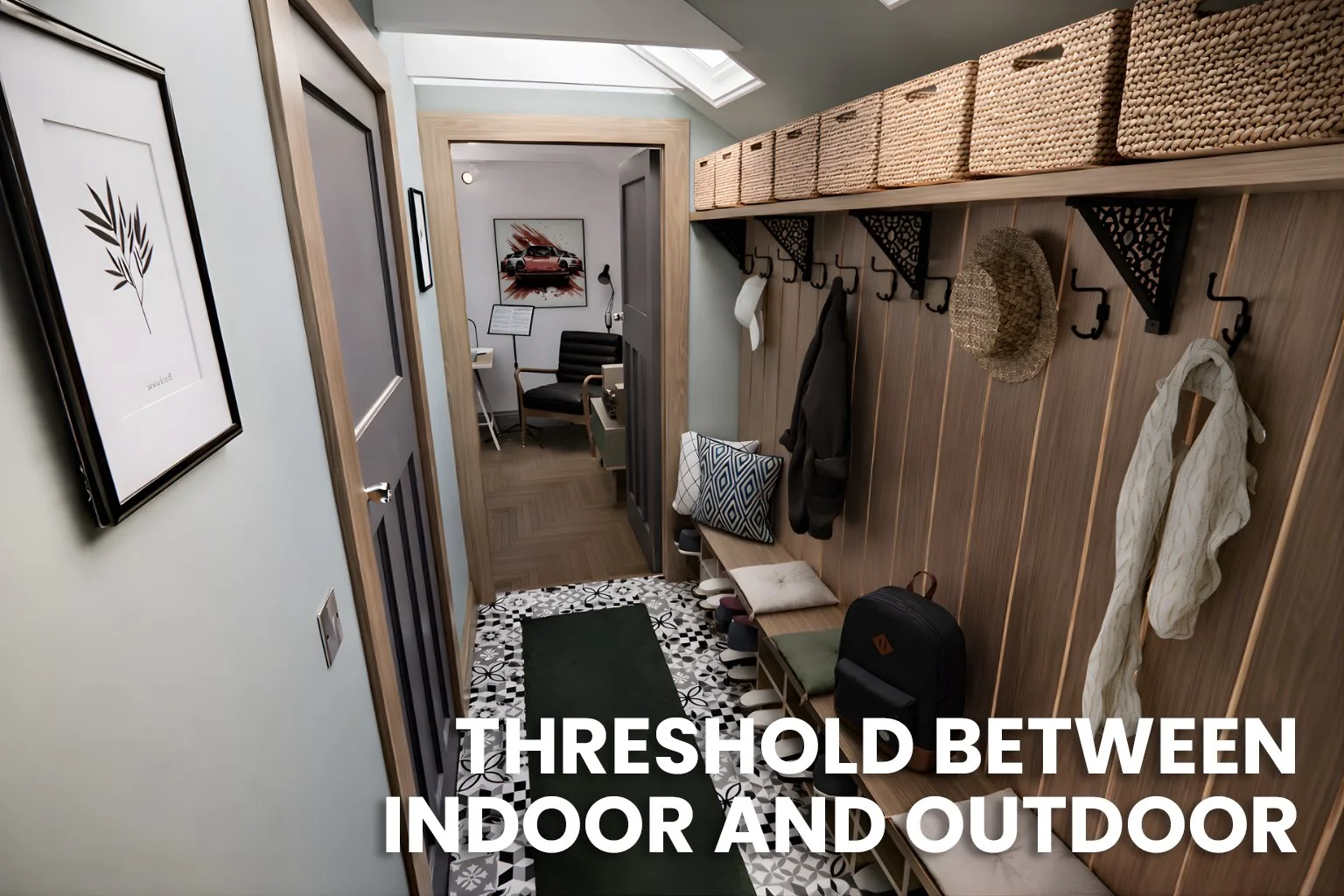
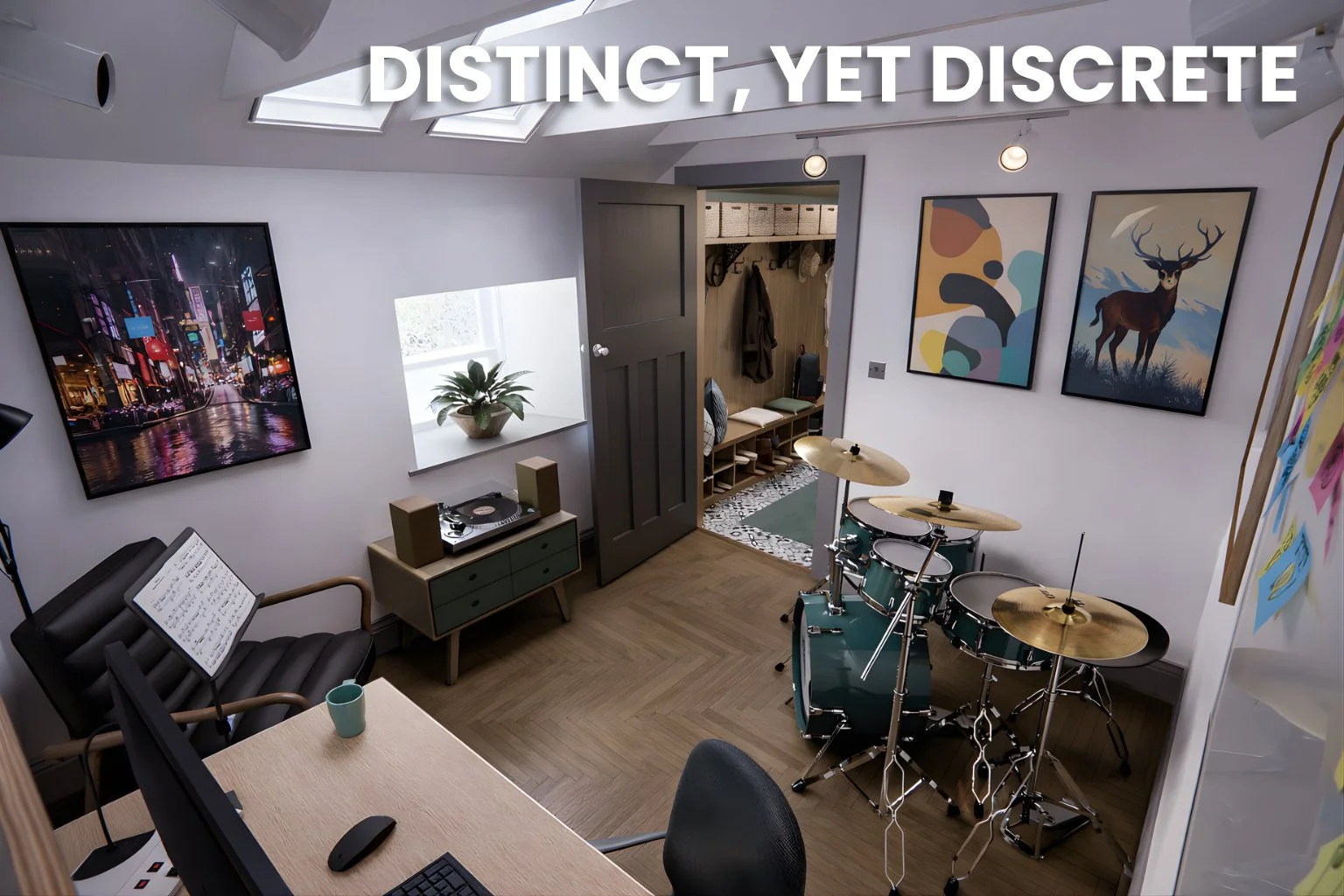
Beyond the main house, the single-storey wing is reworked to provide a more practical and versatile arrangement of spaces. This includes the introduction of a defined cloak area and a ground floor shower room, supporting both everyday use and the adjacent ground floor bedroom. Alongside this, a dedicated studio space is created, offering a quieter environment for working from home or creative use. Its position allows it to feel connected to the house, while still retaining a degree of separation.
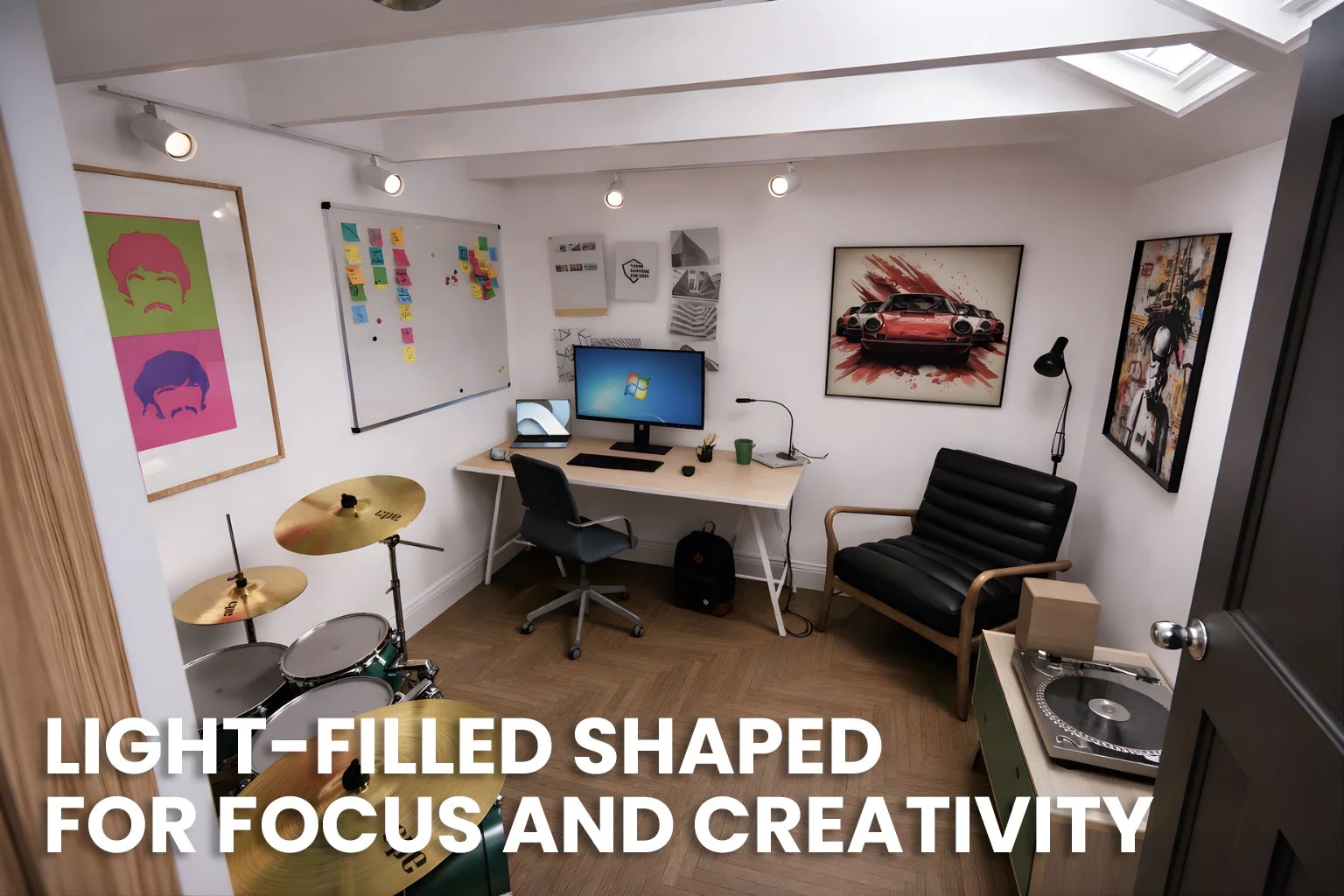
Within the studio, the design takes a more expressive approach. The ceiling is opened up to expose the existing structure, creating a greater sense of volume and reinforcing the character of the space. Rooflights are introduced above to bring natural light deep into the plan, transforming what would otherwise be a darker, secondary area into a bright and purposeful room. This combination of volume and light helps define the studio as a distinct but complementary part of the overall home.
At first floor level, the changes are focused on improving day-to-day functionality. An ensuite is introduced to serve the principal bedroom, while an additional shower room is created to support the remaining bedrooms. In parallel with these spatial adjustments, the building fabric is upgraded through internal lining using breathable insulation and lime-based materials. These measures are carefully considered to respect the existing construction, while significantly improving comfort, performance, and the long-term durability of the building. The project is currently at the Planning stage.