
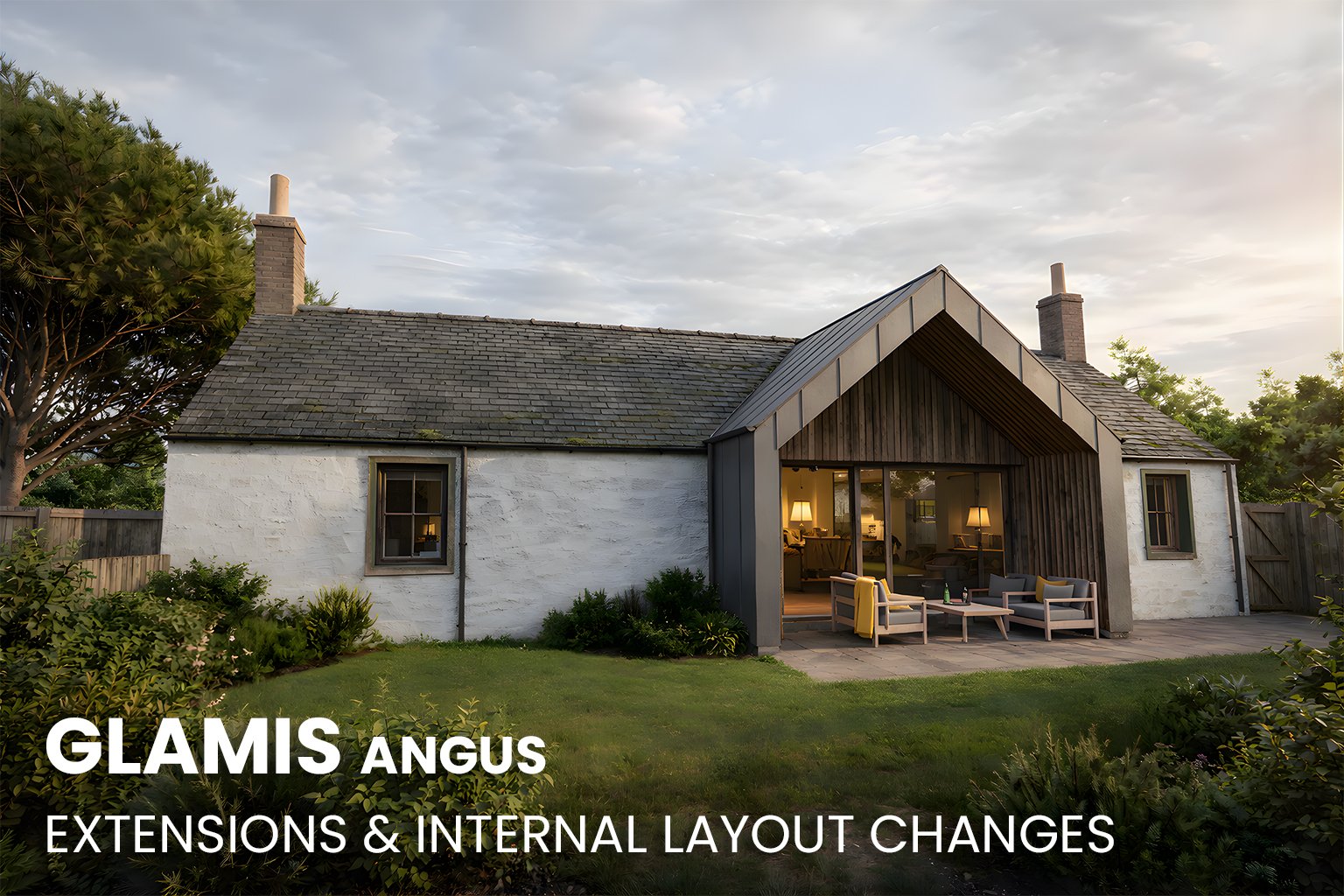
This project involved the transformation of a derelict single-storey rural cottage through a series of front and rear extensions, alongside a full internal reconfiguration. The client’s intention was to create a holiday let, requiring two bedrooms and a generous shared living space. With little constraint in the brief, the approach focused on reimagining the building internally, while retaining the essence of the original cottage through its form, openings, and overall simplicity.
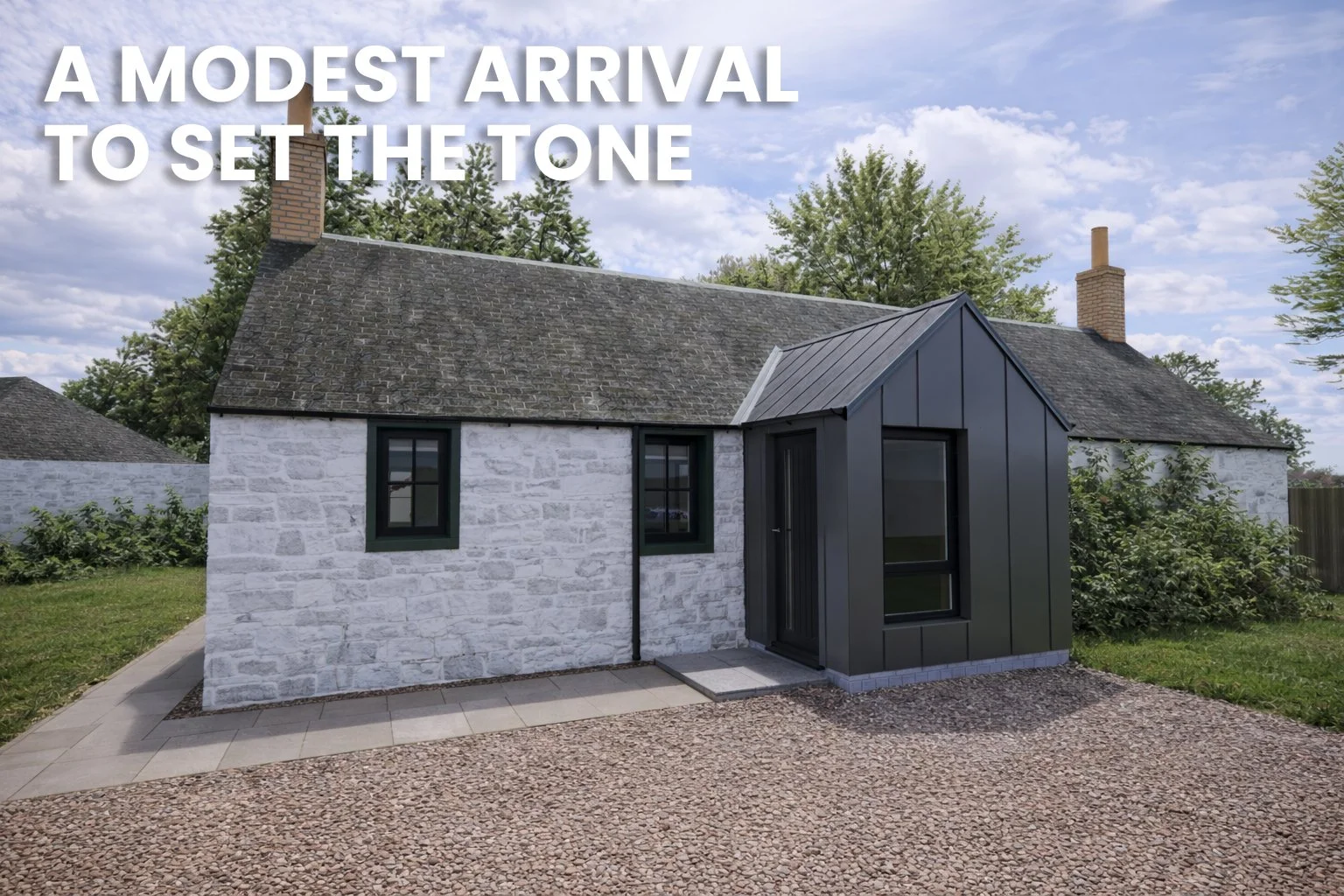
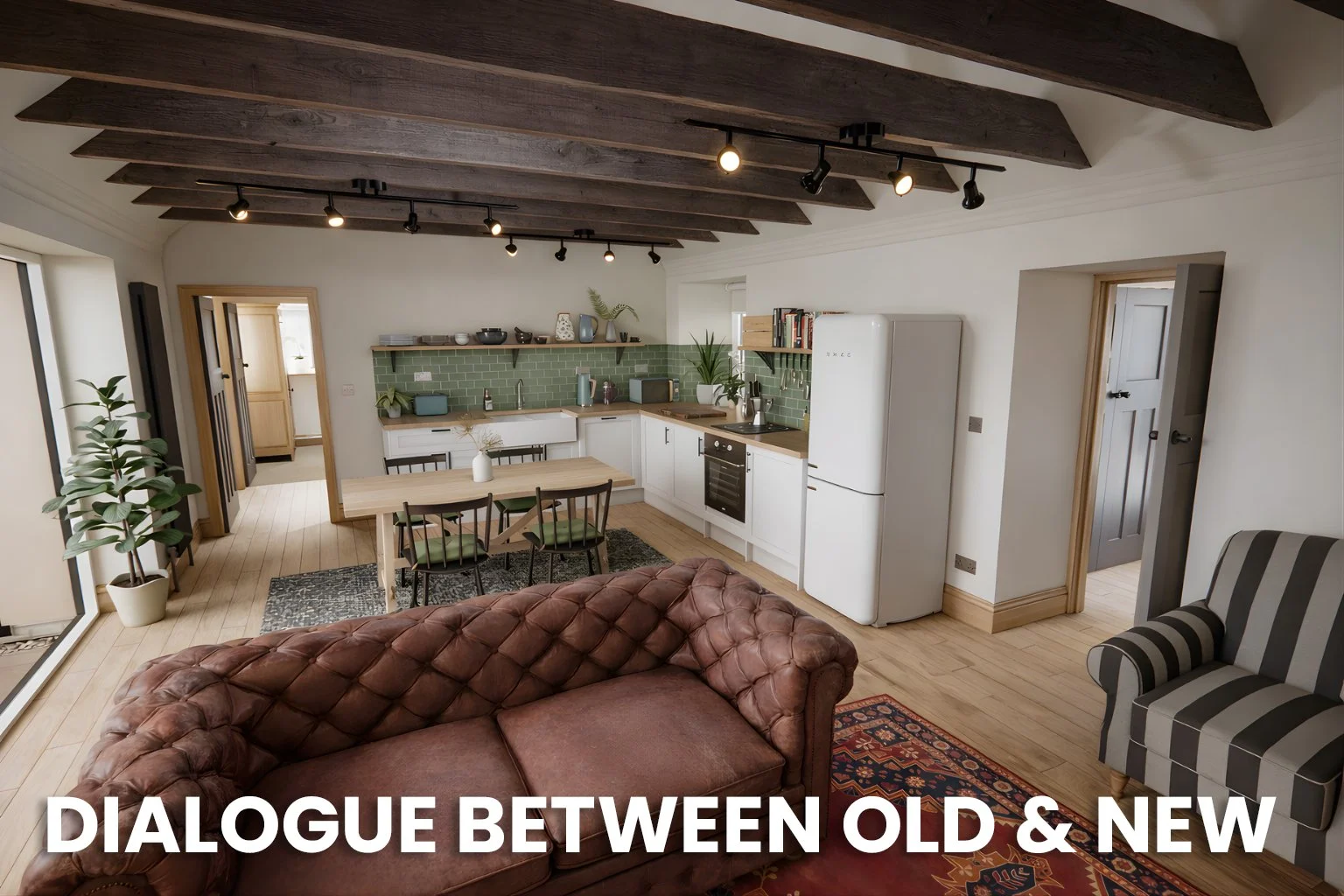
The design sought to balance restoration with intervention. Existing external walls and roof structure were retained, with efforts made to reuse original openings where possible, preserving the rhythm and character of the cottage. New elements were introduced in a way that clearly distinguishes old from new, allowing the building to evolve without losing its identity. The result is a considered contrast, where contemporary additions sit comfortably alongside the existing fabric.
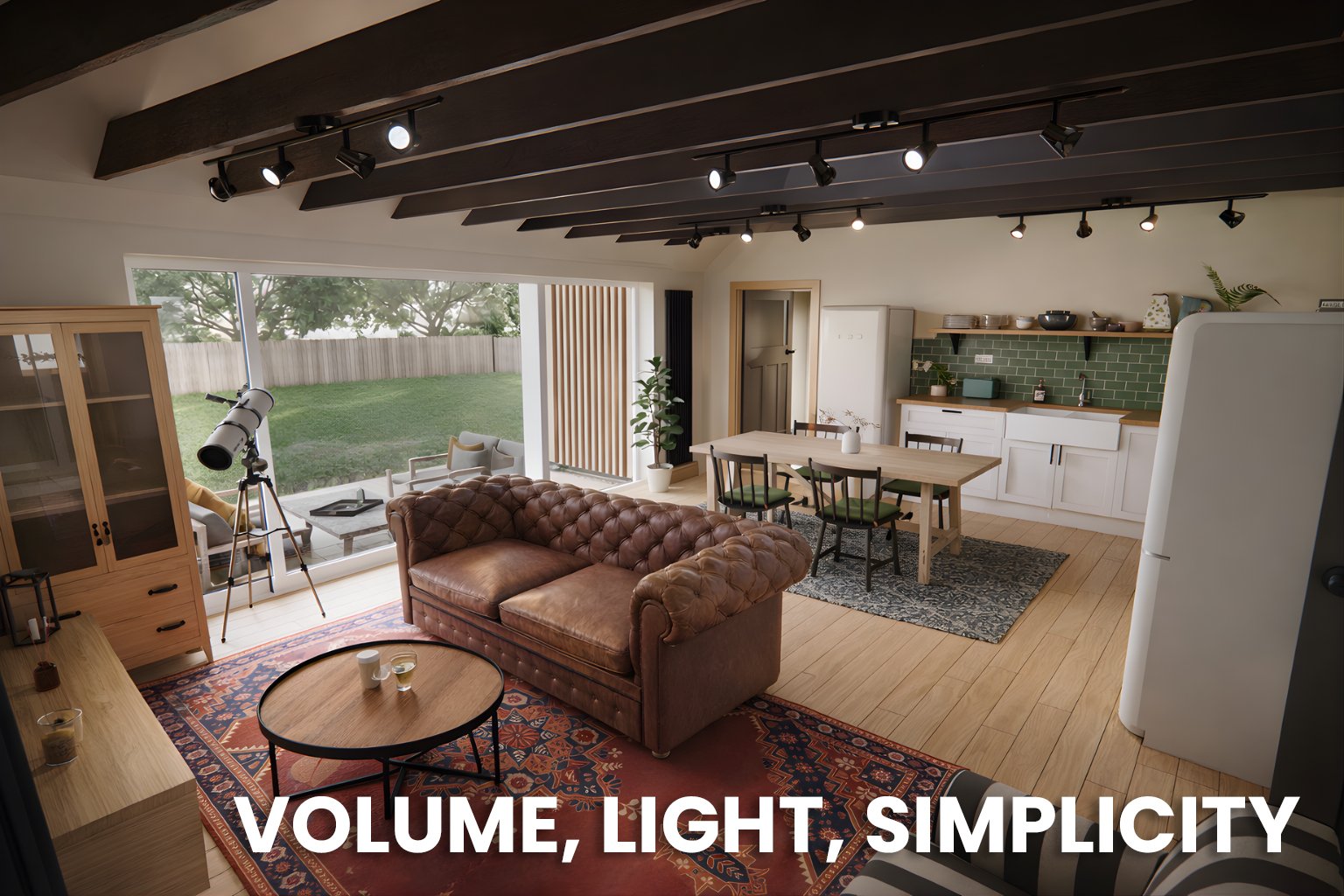
Internally, the layout has been completely reworked to maximise the limited footprint. A new front porch creates a defined point of arrival, leading directly into a generous open-plan kitchen, dining, and living area. This central space forms the heart of the home, with the ceiling opened up to expose the structure above, enhancing volume and character. Two compact bedrooms and a shared shower room are arranged efficiently to ensure the plan remains both functional and legible.
A key intervention is the rear extension, which introduces a large covered canopy and strengthens the relationship between inside and out. Expansive sliding doors open the main living space towards the landscape, improving natural light and framing south-east facing views. Externally, the extensions are primarily clad in standing seam zinc, contrasted with timber elements that wrap into the canopy. This creates a clear yet complementary dialogue between the original cottage and the new additions.
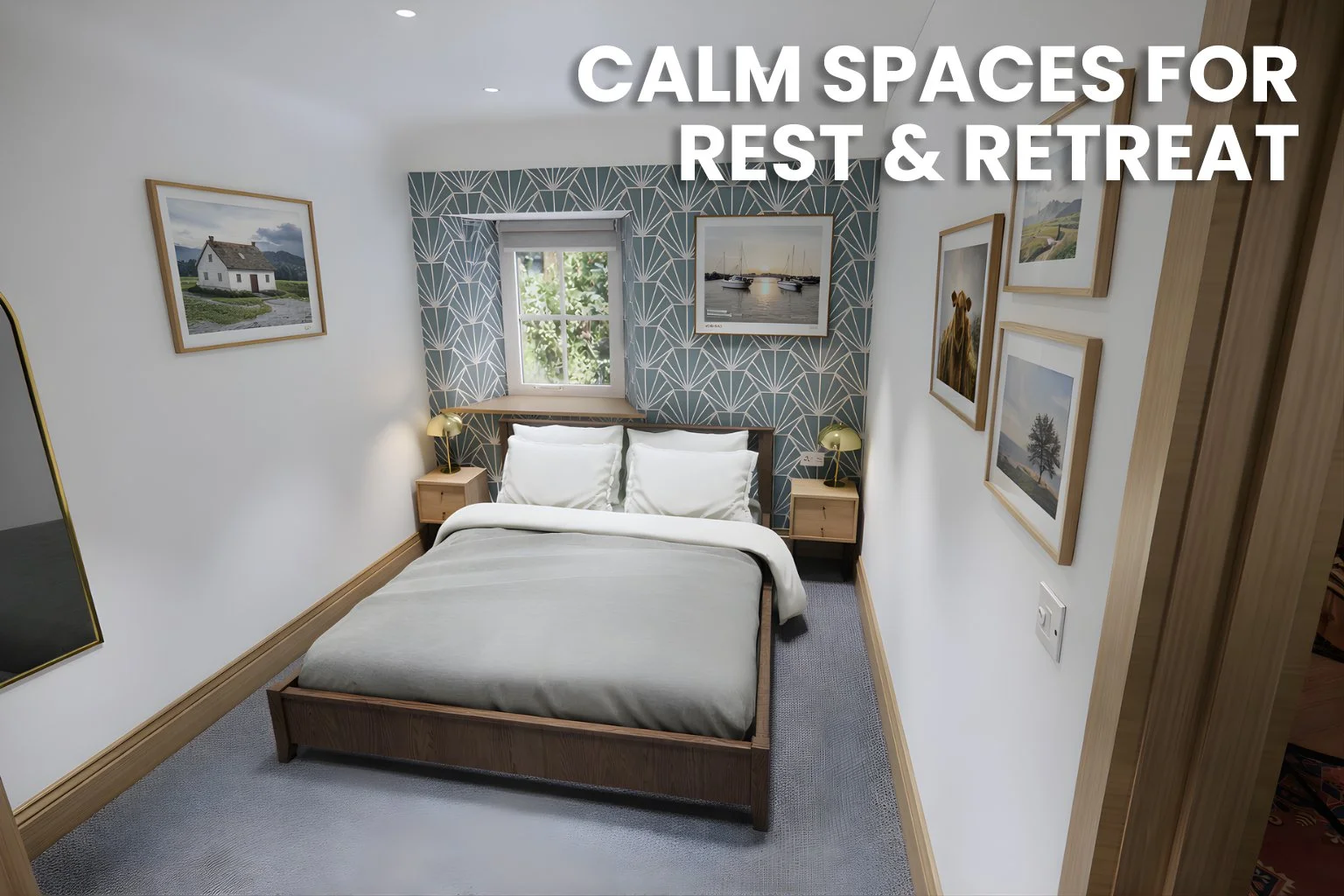
This project demonstrates how a restrained yet confident approach can redefine a modest building. By retaining key elements of the existing structure while introducing carefully considered extensions, the proposal maximises both space and experience within a constrained footprint.
The design balances openness and efficiency, creating a holiday home that feels both generous and grounded in its context. The interplay between exposed structure, natural light, and framed views enhances the overall quality of the internal spaces, while the external interventions remain respectful yet distinct.
With a relatively open brief, the scheme evolved into a more ambitious proposal than initially anticipated, resulting in a design that exceeds expectations while remaining rooted in the character of the original cottage.