

Why I Created ‘The Needs to Know’.
February 2026 - Estimated reading time: 5 minutes.
Introduction:
Before fees, contracts, or drawings come into the conversation, I think it’s important to understand how projects really work, and the role an architect plays within that. When people first start thinking about a building project, they usually have a clear sense of what they want to change. What they often don’t yet have is visibility of everything that sits behind those ideas: the decisions, constraints, risks, and responsibilities that quietly shape how a project unfolds. That gap in understanding is entirely normal. Most people don’t build regularly. But it does matter, because early assumptions influence later outcomes.
That’s why I created The Needs to Know. It’s a short, practical guide intended to introduce the things clients are rarely told at the outset — not to overwhelm, but to provide context. It brings forward conversations that often only arise once a project is already underway, when options are fewer, changes are more costly, or, in some cases, those conversations never happen at all.
Why this document exists:
Many issues in construction arise because decisions are made without full visibility of their consequences — on cost, time, compliance, or buildability. In practice, this often reflects rushed processes, incomplete information, or a lack of clarity about what really matters at each stage. Not everything can be predicted. Construction will always involve some level of uncertainty, particularly in existing buildings. But there is a meaningful difference between unavoidable surprises and problems that could have been anticipated, tested, or mitigated with the right approach.
The Needs to Know exists to introduce the things clients are rarely told at the outset — not to overwhelm, but to provide context. It brings forward conversations that often only arise once a project is already underway, when options are fewer, changes are more costly, or, in some cases, those conversations never happen at all. It is not there to sell a vision or prescribe a particular outcome. It is there to help you understand how architectural projects actually function, where responsibility sits, and how professional judgement is applied in practice.
Who it’s for:
The document is written for anyone considering building work — homeowners, developers, or clients at a very early stage — who want a clearer understanding of what they’re stepping into. You don’t need technical knowledge to read it. You do need an openness to engage with the process and to recognise that good projects depend as much on decision-making as they do on design.
What it helps with:
The guide focuses on the areas that most often cause confusion or difficulty later on, including:
what sits behind drawings and approvals
which early decisions carry long-term consequences
why timelines vary and where delays actually come from
what budgeting really involves beyond a builder’s price
how roles and responsibilities are shared, including around safety
These are not abstract ideas. They are the factors that influence cost, programme, quality, and stress levels on real projects.
Helping you make better choices:
The Needs to Know is as much about helping you ask better questions as it is about understanding the process. By explaining how projects really work, it gives you a framework for assessing advice, and for understanding the difference between reassurance and realism. It should help you feel more confident when speaking to architects and consultants, and more equipped to hold them to account where necessary. A good architect should be comfortable operating in that space.
How to use it:
This document isn’t a contract and it isn’t intended to be read cover to cover in one sitting. Think of it as a reference point. You might read it before getting in touch, return to sections as ideas develop, or use it to sense-check advice you’re being given. Its purpose is to make the invisible parts of the process more visible, so decisions are made with foresight rather than hindsight.
How it fits with working with me:
My approach to architecture is grounded in clarity, realism, and care. Part of that is being open about what can be known, what can’t, and how professional judgement is applied in between. If The Needs To Know helps you make a clearer decision — whether to proceed, who to work with, or how to approach your project — then it has done exactly what it’s meant to do. Starting with clarity is always the right place to begin.
If what you’ve read feels grounded, transparent, and aligned with how you want your project handled, you’re welcome to download a copy of The Needs to Know below.
Example page - front cover
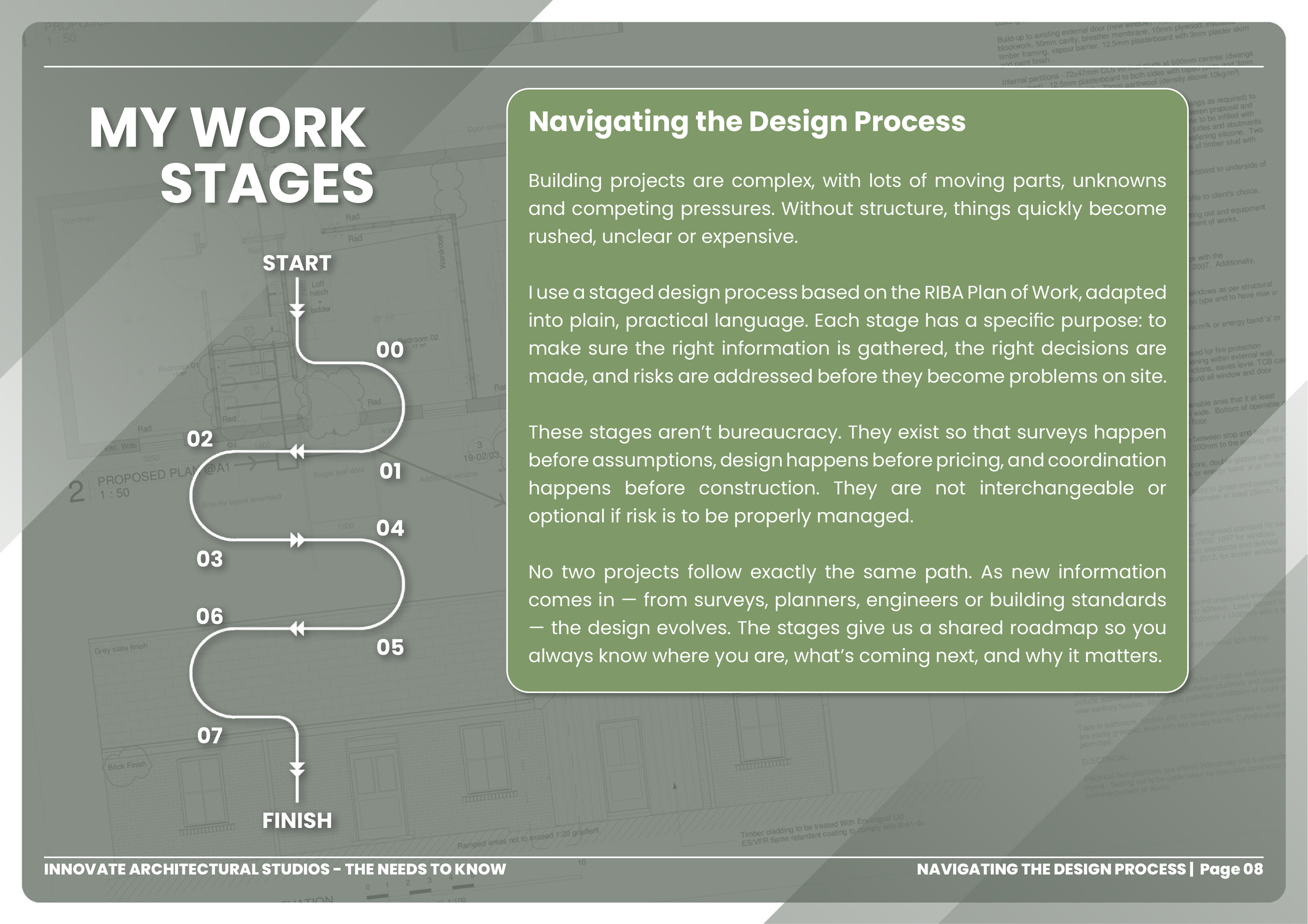
Example page - work stages
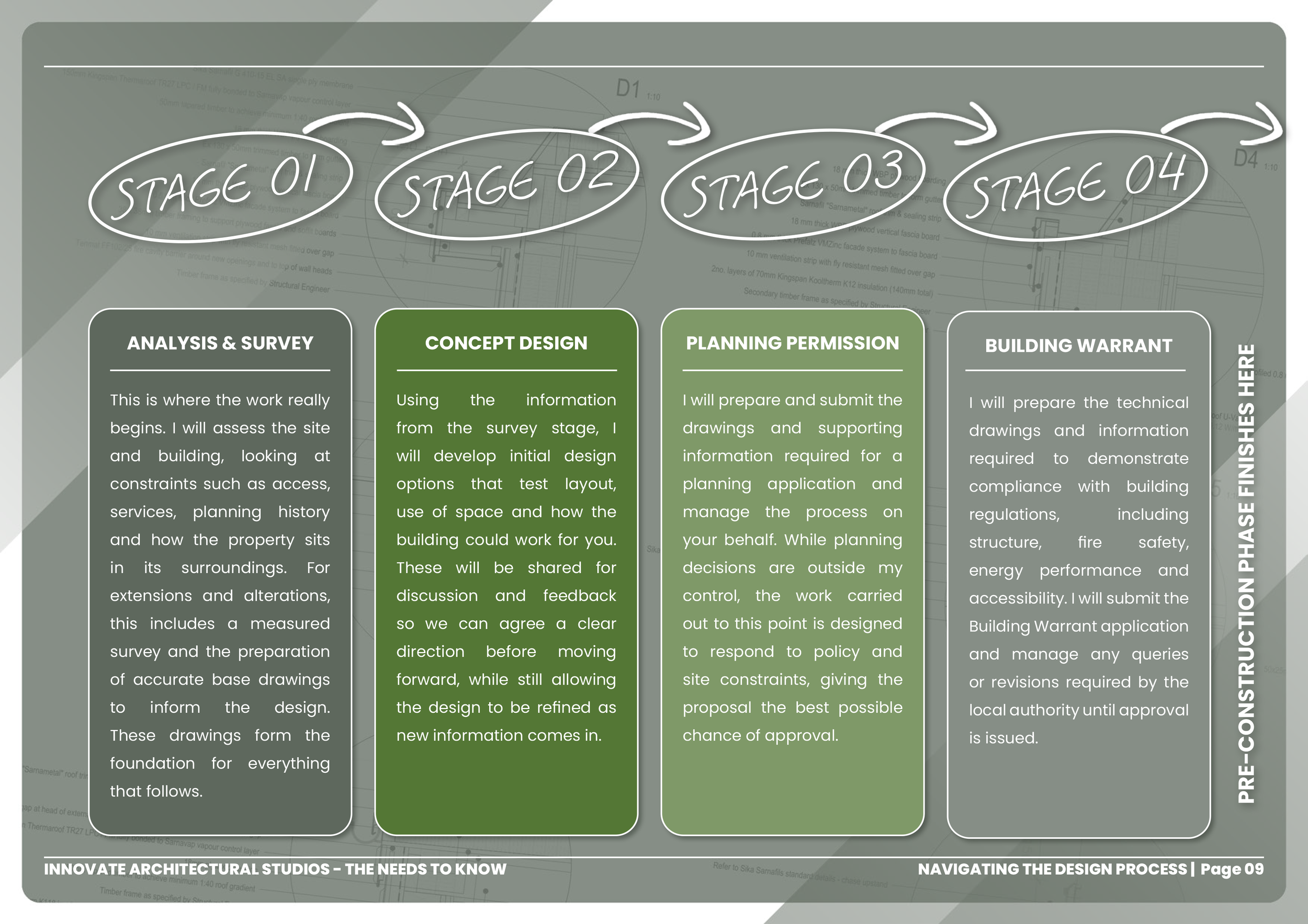
Example page - work stages
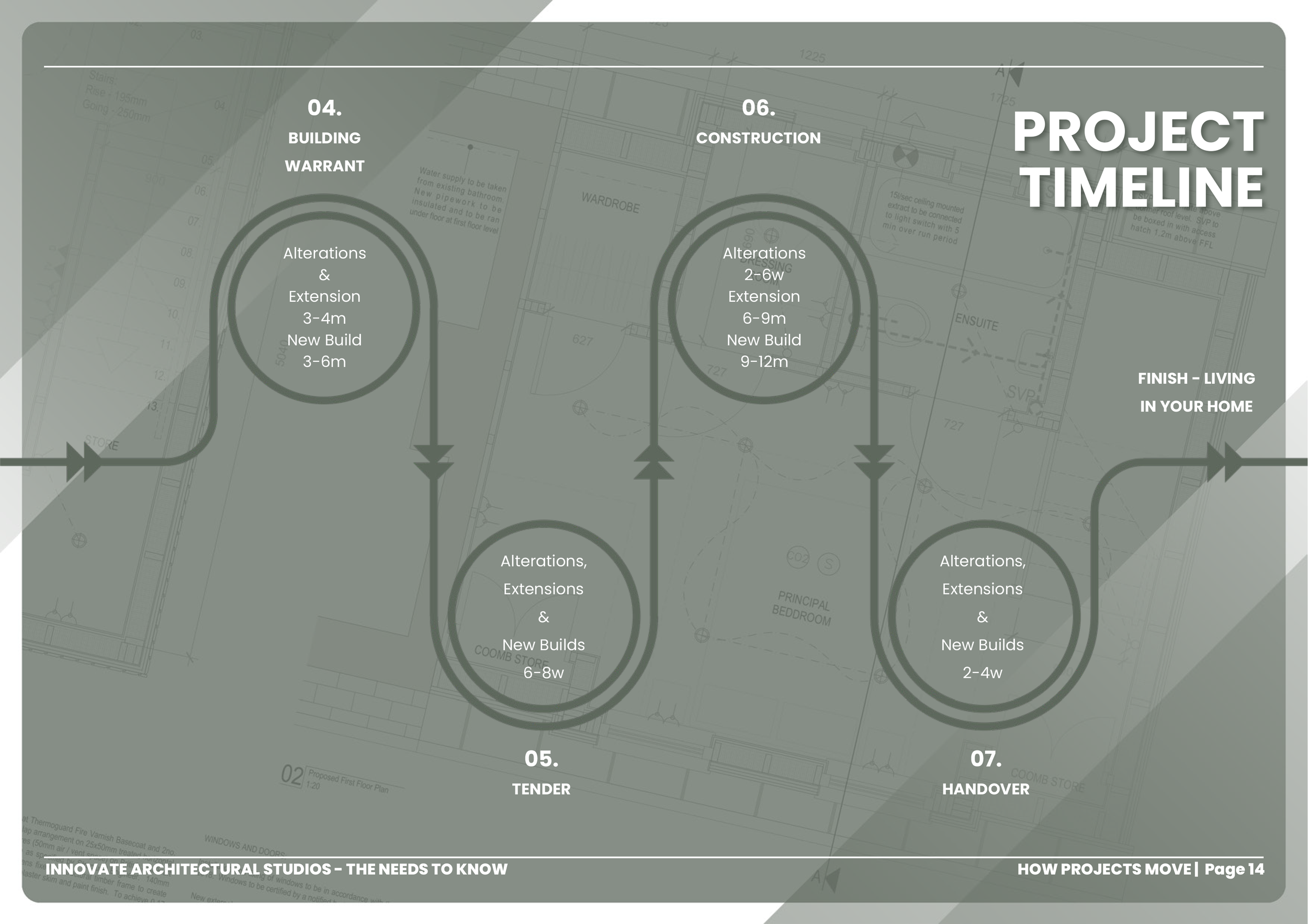
Example page - project timeline
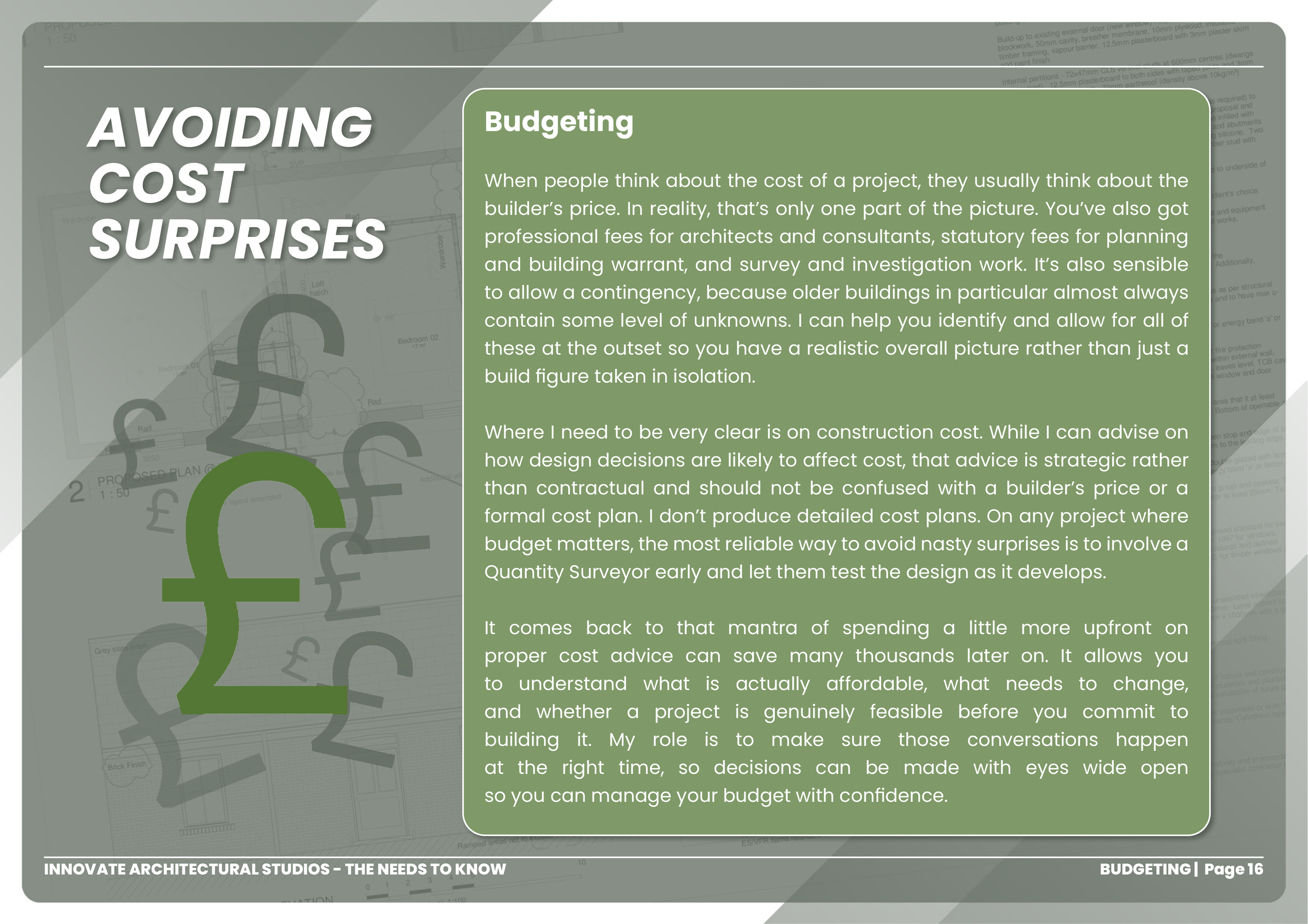
Example page - budgeting